Governance and Inclusive Development
Human Geography, Planning and International Development Studies
Since the 1990s, the Governance and Inclusive Development (GID) group has shaped and responded to key debates in international development studies. Through research, education, and engagement, the group seeks to reimagine development in ways that promote justice, sustainability, and inclusion in a rapidly changing global context.
Governance
GID researchers explore how governance—the processes of decision-making and implementation—affects justice, sustainability and inclusion in varied contexts. The group focuses on the policies, practices, and power dynamics that shape governance, asking who makes decisions, how, and in whose interest.
Inclusive development
At GID inclusive development is understood as both social and ecological inclusion. Social inclusion centers on well-being and regenerative societies, while ecological inclusion recognises the role of ecosystems in sustaining life and planetary health. By connecting themes across the Global South and North, and operating across local to transnational scales, GID investigates how inclusive development can reduce inequalities and create more equitable futures.
Research themes
- Environmental justice in the Anthropocene
- Global inequalities
- Politics of knowledge
You may find more information on these themes in the full strategy document linked below.

Here you can find blogs from the Governance and Inclusive Development research group. These include recaps of the monthly seminar series GID is hosting.

Our GID annual report gives you a sense of the wide range of research, educational and social engagement activities of the Governance and Inclusive Development group.
For previous annual reports (before 2025), please contact JustID via: JustID@uva.nl
-
CLIMARES
The project Climate Resilience in Diverse African Contexts: Co-Creating Knowledge∞Action Networks (Climares) aims to address these questions.
The project will be based at ISS and embedded within The Hague Humanitarian Studies CentreOpens external. Climares investigates the climate risks facing vulnerable populations across different climates, governance frameworks and socioeconomic conditions in the Democratic Republic of Congo, Morocco, Mozambique, Senegal and Uganda.
Funded by: the Dutch Research Council (NWO) through the Research on Routes by Consortia (ORC) programmeOpens external under the Dutch Research Agenda (NWA).
Started: 1 May 2025
-
‘Glocal’ water governance
The ‘Glocal’ Water Governance Research Agenda consists of two separate but synergising projects.
The first research project 'Water Justice and Beyond' contributes to the work of the Global Commission on the Economics of Water and is aiming to redefine the way we value and govern water for the common good.
The second research project ‘Water Allocation, Rights and Institution Study’ reviews a small sample of countries regarding the nature and effectiveness of the current legal, regulatory, and administrative practices in the application of water valuation and water allocation.
Team
-
Small fish for food and nutrition security in Africa (SmallFish4Food)
Achieving Sustainable Development Goals (SDGs) requires multifaceted transitions. The SmallFish4Food project addresses gaps in SDGs 2, 3, and 14. Fisheries are crucial for African economies, supporting 200 million people directly or indirectly. Despite their nutritional significance, fish are often overlooked in global food security discourse.
SmallFish4Food aims to rectify this by leveraging LEAP-Agri findings and engaging stakeholders to improve the sustainable utilization of small fish resources for Africa's low-income populations. Fisheries, being energy-efficient and environmentally friendly, face challenges due to prioritization of large species and limited access. The project seeks to elevate the value of small fish species to combat nutritional deficiencies and promote sustainable food systems.
Funded by: NWO
Project duration: 31 March 2024 - 30 March 2027
Team
-
Development of a municipal wellbeing index for Amsterdam
The current emphasis on Gross Domestic Product (GDP) growth as the primary economic indicator overlooks societal well-being and perpetuates urban-centric growth. Despite decades of growth, inequality persists, challenging the notion that economic growth benefits all.
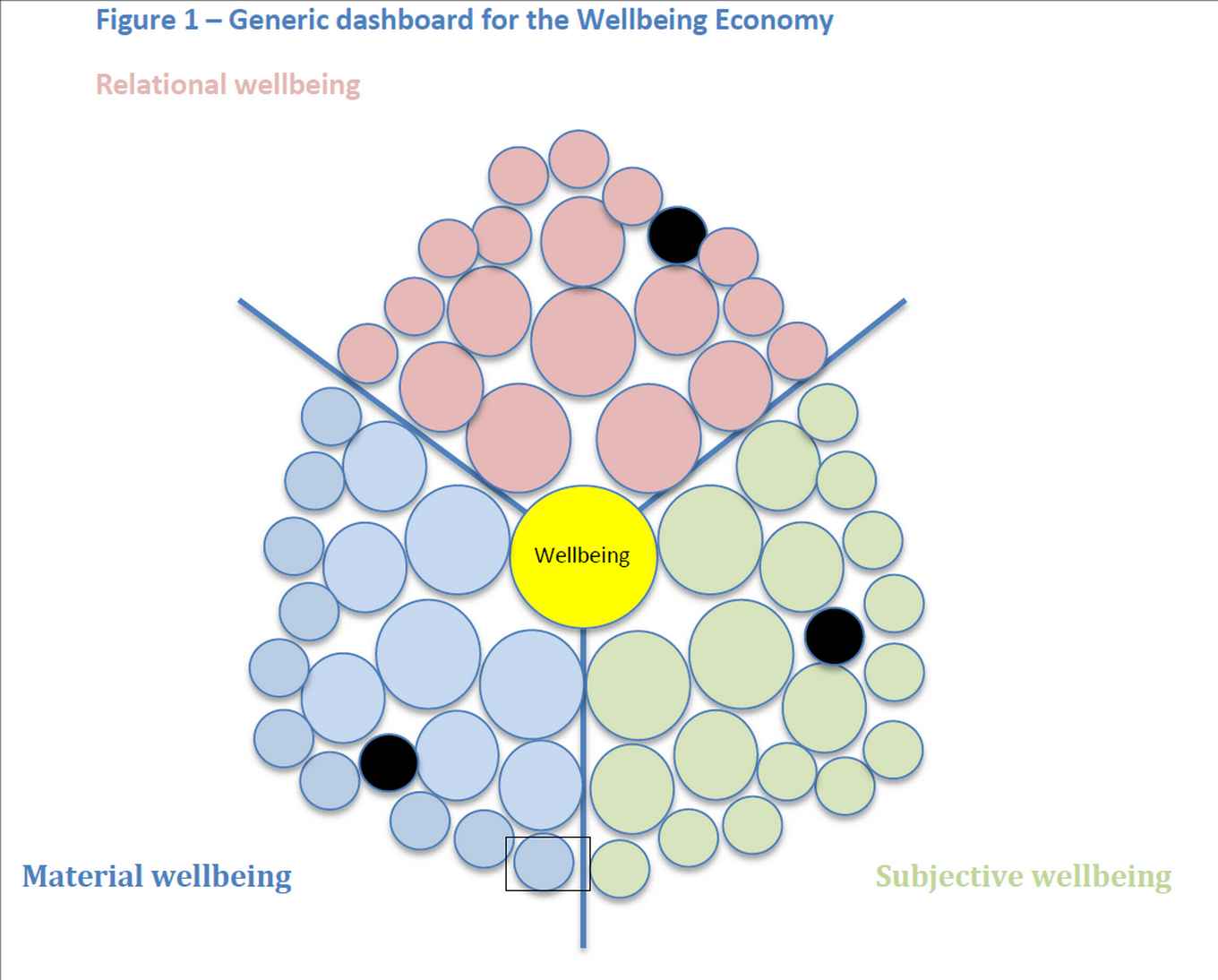
Recognizing the limitations of orthodox economic policies, a shift towards a well-being-focused economy is advocated. Well-being encompasses material, relational, and subjective dimensions, requiring a comprehensive indicator framework aligned with municipal budgets and policies.
This applied research project aims to develop a well-being index and dashboard tailored to urban needs, integrating diverse indicators to guide policy and planning. Initial stages involve analyzing existing initiatives, identifying relevant indicators, and aligning with municipal goals.
Team
-
RISERS: Researching Innovations Supporting Higher Education for Regenerative Societies
The RISERS project uses participatory, co-creative, and action-oriented methodologies inspired by regenerative development and design. It includes three case studies:
- FRIS Education Innovation Grants: Researching activating, retraining, and reconciling forces within Fair, Resilient, and Inclusive Societies grants, broader FRIS communities, and institutional contexts. Conducted by Sidsel Petersen and Mieke Lopes Cardozo.
- HOT (Higher Education in Transition): Documenting and analyzing this transformative movement’s workshops, sessions, and outputs. Conducted by Sam Hamer and Mieke Lopes Cardozo.
- CoP Regenerative Higher Education: Developing a living book exploring regenerative education through dialogical and collaborative autoethnography, led by Bas van den Berg, Mieke Lopes Cardozo, and Koen Wessels, with support from Sofia Sarmiento Arboleda.
-
Knowledge Brokering and Synthesis
This five-year research programme, supported by the Dutch Research Agenda (NWA) and the Netherlands Ministry of Foreign Affairs, explores how Sustainable Development Goals (SDGs) interact and how policy interventions can optimise synergies and reduce trade-offs, particularly in developing countries.
Through three interlinked themes focusing on SDG governance, food security, and climate-conflict dynamics, research consortia work across disciplines and regions to provide evidence-based insights that inform more coherent and inclusive global development policies.
GID Professor Dr. Nicky Pouw leads the Knowledge Brokering and Synthesis project together with Prof. Dzodzi Tsikata (University of Ghana) and Yannicke Goris (The Broker).
Their consortium plays a central role in bringing together findings from the different projects, fostering policy dialogue, and strengthening knowledge exchange between science, policy, and practice. By connecting diverse perspectives and generating actionable insights, the project aims to support innovative solutions to complex development challenges and enhance the societal impact of SDG-related research.
Funded by: Sustainable Development Goal (SDG) Interactions and Policy Interventions in Developing Countries of the Dutch Research Agenda, NWO
Duration: 24 Sept 2024 - 14 March 2026
-
Graduate Research on Worldwide Challenges (GROW)
GROW is a network of internationally collaborating universities from the Netherlands with longstanding collaborations with our partners at the African continent.
GROW launched an international PhD programme that offers tomorrow’s leaders a unique opportunity to do high quality and novel research, related to the 2030 Sustainable Development Goals on the African continent.
Supervision for the PhD students will be provided by globally renowned professors, supported by societal actors and academics from our African partners. With the projects, GROW aims to make a real contribution to understanding and addressing the urgent worldwide challenges
-
VISION Project: Envisioning Convivial Europe
The VISION Project explores how people across Europe live together and respond to shared challenges in times of social and economic change.
Focusing on regions affected by ageing populations, outward migration, and economic decline, the project examines how communities adapt in their everyday lives and how these experiences differ across gender and generations.
By studying cross-border work and mobility, VISION aims to understand what it takes to make Europe a place where diverse people can thrive and pursue their aspirations together. This collaborative research is led by the German Centre for Integration and Migration Research (DeZIM), Paris Lodron University Salzburg, and the University of Amsterdam.
Funded by: the Volkswagen Foundation under the “Challenges for Europe” initiative (2022–2025).
Duration: 1 Jan 2022 - 31 Dec 2025
Team
-
The Global Constitution project
Distinguished Professor Joyeeta Gupta of the University of Amsterdam, is undertaking a research project to write a Global Constitution.
The aim of this draft Constitution is to identify rights and responsibilities for all within the context of the Anthropocene. It aims to promote social wellbeing and environmental prosperity within an equitable world. The Open Science Justice Lab is dedicated this to collaborative research, public engagement, and open-access knowledge sharing to promote research to develop a Global Constitution.
It explores how a 21st-century Global Constitution could address today’s global challenges without marginalizing local issues. By inviting diverse perspectives, we aim to shape a framework for a more just and sustainable world.
Funded by: Spinoza Price, Dutch Research Council (NWO) under the awarded to Prof. Joyeeta Gupta.
Duration: 2024-2029
Team
-
CLIFF – Climate Change & Fossil Fuels
To combat global warming, we have to stop using fossil fuels. This will have a major impact on both investors in related industries who will have to write off trillions of dollars and developing countries that had hoped to use the fossil fuel industry to drive economic growth. This project looks into the roles of the various different stakeholders and develops tools to help them all move towards climate-resilient change and inclusive development.
We argue that to halt climate change, the 2015 Paris Agreement implicitly requires leaving fossil fuels (FF) underground (LFFU) and coherent financial flows. This implies stranding huge amounts of FF resources and assets (worth $16-300 trillion), affecting big investors: FF firms, shareholders (pension funds/philanthropies), debt financers (aid agencies/development banks) and governments. Research is scarce on big investors, the implications for developing countries with FF resources, and how LFFU can be equitably mobilized.
CLIFF combines institutional analysis and a theory of change for inclusive development (ICID) using a transdisciplinary, comparative case study approach. CLIFF will prepare an Interactive Atlas, and a Stranded Asset Index, co-create equitable policy instruments and assess strategies of agents of change to make such climate policy instruments politically feasible and effective. Rather than ‘Building Back Better’ from the COVID-19 pandemic, CLIFF strives for Catalysing Climate-resilient Change.
Case studies
CLIFF is using a transdisciplinary, comparative case study approach and has identified nine countries/regions within which these financial actors operate. From the industrialized world, CLIFF will examine the EU, UK, US and Canada; from the G77 & China: Brazil, South Africa, India and China; the BASIC countries; and possibly Saudi Arabia. These countries are selected since they are dominant players in financial flows and investments in FF, and have a strong potential blocking or promoting role in LFFU. In addition, Ghana, Kenya, Uganda and Mozambique will be studied as LMICs that are developing themselves as FF producers.
Funded by: the European Research Council
Project duration: Nov 2021- Nov 2026
Project team
Postdoc
dr. Yang Chen | Global Inventory of FF and Financial Flows (to be appointed).
PhD's
Augusto Heras | Focuses on Low- & Middle-Income Countries
Frank de Morrée | His work relates to Philanthropic Foundations
(Ja)Nina Herzog-Hawelka | Her research deals with Fossil Fuel Firms
Moataz Yakan Talaat | His work relates to Debt Financiers
Clara McDonnell | Her research focuses on Pension Funds
Master students
Together they work as a team on comparative and integrative research to ensure that the sum of all projects is significantly more than the sum of the individual work of each researcher.
Inès Boivin, Claire Boogard, Thomas Cordes, Giuliana Gentile, Lynn Haasloop-Werner, Robin Hids, Juliette Linn, Marc Olsen, Vivien Schüßler, Gabriela Zuntová, Quynh Anh Chu, Glenn Dijks, Ben Kapadia, Blanca Reemst, Marika Schmitz, Ellen Snaathorst, Phani Varnava, Elise Granlie, Ingrid Ronglan, Janne Piper.
-
Earth Commission
The Earth Commission is an international team of natural and social scientists, composed of 17 members from 12 countries, and divided into 5 working groups: Modelling, Biodiversity, Nutrients & Pollution, Transformation, and Translation Methods. It is led by three renowned professors: Johan Rockström, Joyeeta Gupta, and Dahe Qin.
The commission aims to facilitate climate action based on science through solid academic cooperation for people and the planet. In doing so, it incentives individuals, companies, cities, and countries to hold stewardship of the global commons. The work of the commission serves as a form of translation from scientific calculations to science-based targets for nature, which can then be implemented at the local and global levels.
Prof. Joyeeta Gupta co-leads with Diana Liverman Working Group 4, Transformation. This working group focuses on integrating justice framework into the Earth Commission work by investigating synergies and trade-offs between social and environmental goals, and socio-economic drivers of Earth system changes. The group, composed of social scientists, analyses policies and actors in order to identify transformative change, as well as the design of governance architecture and mechanisms aimed at achieving desired transformations.
On May 31st, the Earth Commission presented the Nature publication Safe and Just Earth system boundaries, which for the first time incorporated justice into boundary setting, and received considerable amounts of engagement both from academia and the general public.
Funding
Global Challenges Foundation; the Global Commons Alliance, a sponsored project of Rockefeller Philanthropy Advisors (with support from Oak Foundation, MAVA, Porticus, Gordon and Betty Moore Foundation, Tiina and Antti Herlin Foundation, William and Flora Hewlett and the Global Environment Facility).
Project period
- Phase 1 : 2020-2023
- Phase 2 : 2023 -
Project Team Working Group 4
University of Amsterdam
- Joyeeta Gupta - project leader
- Crelis Rammelt - assistant professor
- Joeri Scholtens - assistant professor
- Klaudia Prodani - junior researcher (2020-2022)
- Daniel Ciobanu - junior researcher (2021-2022)
- Paola Fezzigna - junior researcher (2022-ongoing)
- Giuliana Gentile - junior researcher (2022-ongoing)